by Alan Smith
Andrew Meyer is a fit, stocky, shaven-headed personal trainer who runs his personal training business from a London gym. I meet up with him at an ungodly hour several times a week, where the main activity he seems to do is stand in front of me and count to ten.
I pay Andrew good money to do something that I could do myself. Lift heavy things repeatedly and count from one through ten. Everyone knows that there are countless personal fitness videos on YouTube, dozens of apps and thousands of online articles explaining what to do to maintain personal fitness. It's easy, right? Save the money, do it myself.
But here's the thing that none of those resources give me – accountability.
When my alarm goes off at 6 am on a cold winter morning its often only the knowledge that Andrew is already at the gym waiting for me and ready to put me through my paces that hauls my backside up and out the door.
Everyone knows that exercise is good for you and yet most of us don't do it. We know, we don't do. Knowledge does not lead to action.
I have a client called Chris. A lovely, super talented guy who runs a film production business based in East London. He's been successful and accumulated significant private wealth, some held in property and some managed by our team. We manage his safety net if all goes wrong - what he refers to as his ‘family fortress.'
Chris is usually pretty laidback but the current global crisis has spooked him. He's been on a few calls with friends, one who works for a hedge fund and has convinced him that he needs to sell his portfolio. He's also been receiving unsolicited advice from his father-in-law. That hasn't helped his blood pressure either.
I listened to Chris's concerns the other day. I asked him to clarify what his views were right now, to update me on his business, family situation and how he saw the future panning out. He talked for 20 minutes and I listened carefully.
When he was finished, I asked him to trust me and do nothing.
That's right, do nothing. Don't sell the investment portfolio that we designed for him in calmer times. Don't change the structure, and don't even see this time as a buying opportunity.
I asked him to remind me what the money was for and when he planned to use it. I asked him if his plans, the same ones that we'd talked through at every meeting, had changed. He took a deep breath and agreed that, on reflection, nothing had changed and the money was there to support his family's lifestyle over multiple decades into the future, and not just the next few months.
I reminded him that he owns a globally diversified investment portfolio, not just some amorphous thing called ‘stocks and shares.' He owns a small chunk of over 8,000 companies. That he had a piece of world-class businesses, every one of them led by some of the smartest and hardest-working executives on the planet, committed to growing their business, generating profits, improving their share price and paying income to him, as a shareholder.
I reminded him that he was in essence, invested in human ingenuity and that wasn't something he should bet against lightly. Whatever the future holds, and no one knows, human beings have a long track record of getting through even the most difficult of circumstances.
I explained that although the future is uncertain, my views were guided by 200 years of capital market history which is all we've really got to go on. And despite the perfectly normal human impulse to do something - anything – I calmly repeated my advice to stay put.
We often explain to our clients that one of the most important roles we play in their lives is that of a critical friend. We'll act as their accountability partner. If necessary, we'll explain the difficult truths and avoid the comforting lies – the easy wins, the let's buy gold, buy bitcoin, invest in your friend's start-up tech company. The things that sound good but rarely are.
I explain that outside of their immediate family, no one cares more for their security and financial wellbeing than we do. We ask them to trust us and sometimes we ask them to do nothing.
Naval Ravikant recently reflected on the current lockdown, saying, "People don't just go to restaurants to eat, they don't just go to church to worship and they don't just go to offices to work." There's much more to those activities than their basic utility.
I don't just hire Andrew to count to ten and our clients don't just hire us to create a financial plan or design an investment portfolio. Sometimes we do things or avoid things, because we're human. What we need is trusted partners to protect us from ourselves and to bring out the best in us – even if sometimes that means doing nothing.
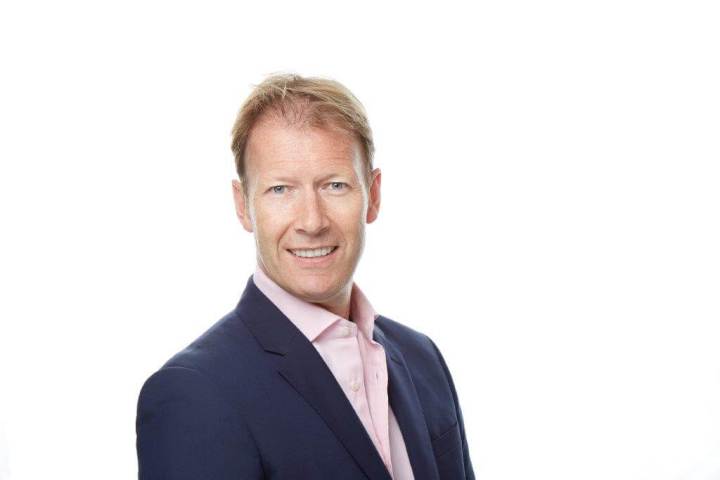
Alan Smith is the founder and CEO of Capital Asset Management, one of the UK's leading firms of independent Chartered Financial Planners. From their origins as a small, transaction-based IFA, Alan and his team have grown the business into a modern, profitable, boutique firm, delivering lifestyle financial planning services to a growing client base of affluent families.
